Oxidative Phosphorylation (OXPHOS) Project
Bottom line: oxidative phosphorylation makes most cellular ATP through four
electron-transport complexes, two mobile carriers and the ATP synthase, built
from about 90 subunits plus dozens of assembly factors. We prioritized 38 human
nuclear-encoded genes across all five complexes, the carriers and CoQ/ETF
entry points, and reviewed every existing GO annotation on them; 36 now have
reviews in the repo (1,330 annotations: 861 accepted, 201 kept as non-core, 152
marked over-annotated, 38 modified, 52 removed, 18 NEW, 8 undecided). The reviews apply one
pattern throughout: catalytic subunits enable their own activity and
contributes_to the complex activity, non-catalytic subunits only contribute,
and assembly factors (SURF1, SCO1/SCO2, COX10, COX15) are annotated to assembly
or cofactor biosynthesis rather than to the oxidase itself. Typical removals
were whole-complex activity on an assembly factor (SURF1 cytochrome-c oxidase
activity) and a wrong-reaction MF (COX10 GO:0004311). A taxon-neutral
OXPHOS module models each complex as one catalytic
node with its subunits as active units. NDUFS2, NDUFS4, SDHC, SDHD, UQCRC1,
BCS1L, ACAD9, ATP5F1A, SDHAF2, COQ8A and ETFDH were reviewed under other
projects and modules; only COX7A2L and HCCS remain unreviewed.
Overview
Oxidative phosphorylation is the metabolic pathway by which mitochondria generate ATP through
electron transport and chemiosmotic coupling. The electron transport chain (ETC) comprises four
multi-subunit complexes (I-IV) embedded in the mitochondrial inner membrane, plus two mobile
electron carriers (ubiquinone/CoQ10 and cytochrome c). Complex V (ATP synthase) uses the
resulting proton gradient to synthesize ATP.
OXPHOS is responsible for ~90% of cellular ATP production and is unique in requiring
coordinated expression from both nuclear and mitochondrial genomes: 13 subunits are
mtDNA-encoded, while ~80 structural subunits and dozens of assembly factors are nuclear-encoded.
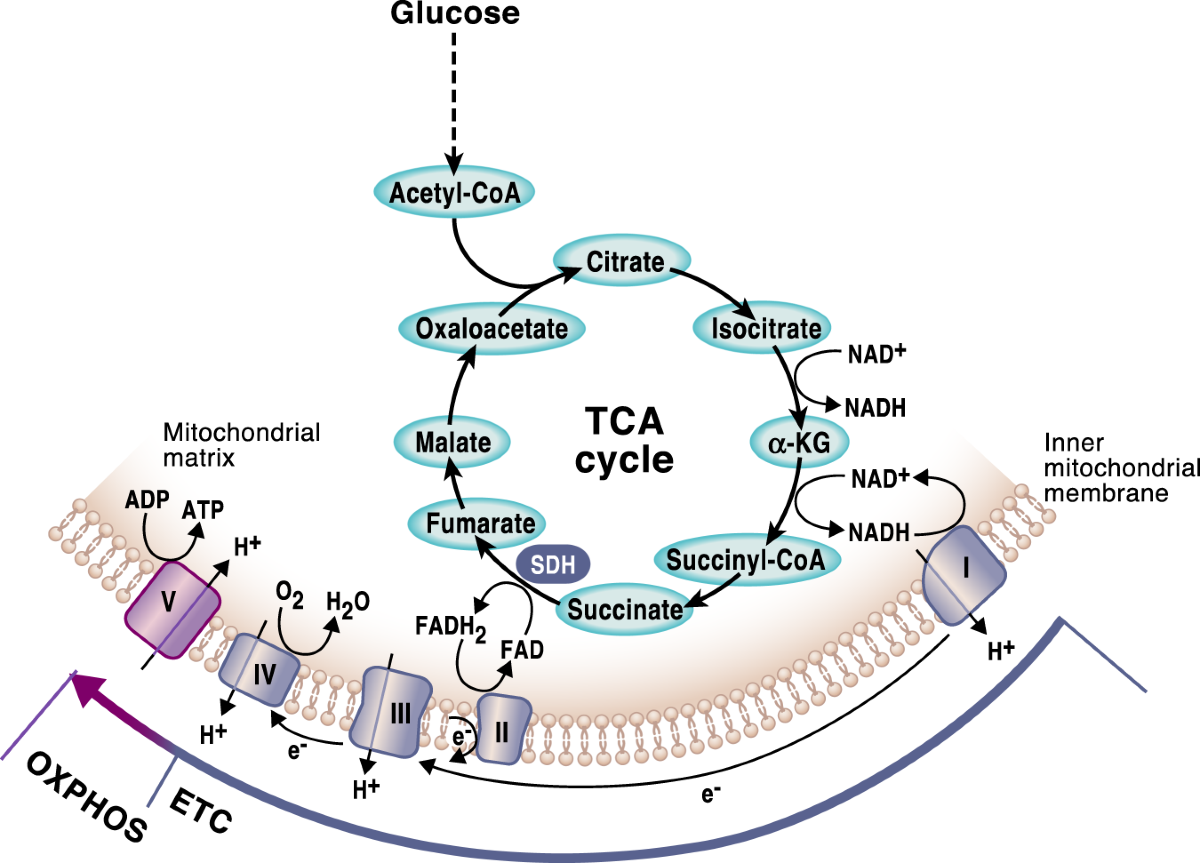
Fig. 3 from Martínez-Reyes & Chandel (2020) PMID:31911585.
The TCA cycle and OXPHOS are tightly coordinated. Complex II (SDH) uniquely bridges both
pathways: the succinate → fumarate reaction (TCA step 6) simultaneously feeds electrons
into the ETC via FAD → FADH₂ → Fe-S → ubiquinone.
Generic OXPHOS module
This project began as a gene-by-gene annotation review (below), which predates
the Module KB. A taxon-neutral, recursively decomposable module for the whole
pathway now lives at modules/oxphos.yaml. It models
OXPHOS as a coupled ETC + ATP-synthesis process, represents each respiratory
complex as a PROTEIN_COMPLEX node carrying its complex-level catalytic
activity (subunits as active_units, not separate annotons), recursively
decomposes the modular complexes (Complex I N/Q/P arms; ATP synthase F1/Fo), and
captures lineage variants (type-II NADH dehydrogenase, alternative oxidase,
bacterial bd-oxidase) as variant_sets. The gene-by-gene reviews remain the
source of concrete subunit grounding that a future organism-specific module can
specialize from.
Validate with:
uv run linkml-validate -s src/ai_gene_review/schema/gene_review.yaml -C ModuleReview modules/oxphos.yaml
Model Species
Primary: Homo sapiens (human)
Annotation Review Focus
Key annotation issues in OXPHOS genes:
- Assembly factors should be annotated to assembly processes, NOT electron transport directly
- Dual-function proteins (e.g., SDHA in both TCA cycle and ETC) need both roles annotated
- Tissue-specific isoforms may warrant distinct annotations
- Supercomplex/respirasome assembly is a distinct process from individual complex assembly
- SDH subunit tumor suppressor roles (oncometabolite mechanism) vs. metabolic function
- Avoid generic "protein binding" for assembly factor interactions
Complex I -- NADH:ubiquinone oxidoreductase
The largest ETC complex (~1 MDa, 44 subunits). 7 mtDNA-encoded + 37 nuclear-encoded.
Transfers electrons from NADH to ubiquinone, pumping 4 H+ per NADH.
Core catalytic subunits (Priority 1)
| Gene | UniProt | Function | Notes |
|---|---|---|---|
| NDUFS1 | Q16795 | 75 kDa Fe-S protein, electron transfer | N-module |
| NDUFV1 | P49821 | 51 kDa, FMN/NADH binding | N-module, primary electron acceptor |
| NDUFS2 | O75306 | 49 kDa, ubiquinone binding | Q-module |
| NDUFS7 | O75251 | PSST, Fe-S cluster | Q-module |
| NDUFS8 | O00217 | TYKY, 2x [4Fe-4S] | Q-module |
| NDUFV2 | P19404 | 24 kDa, [2Fe-2S] | N-module |
| NDUFS3 | O75489 | 30 kDa | Q-module |
Key accessory subunits (Priority 2)
| Gene | UniProt | Function | Notes |
|---|---|---|---|
| NDUFS4 | O43181 | 18 kDa, regulatory | Leigh syndrome gene |
| NDUFA9 | Q16795 | 39 kDa | Accessory |
| NDUFA13 | Q9P0J0 | GRIM-19 | Cell death-related |
Key assembly factors (Priority 2)
| Gene | UniProt | Function | Notes |
|---|---|---|---|
| ACAD9 | Q9H845 | MCIA complex | Assembly factor with acyl-CoA dehydrogenase fold |
| NDUFAF2 | Q8N183 | N-module assembly | Disease gene |
| TMEM126B | Q8IUX1 | MCIA complex | Assembly factor |
| NUBPL | Q8TB37 | Fe-S cluster transfer | Assembly factor |
Complex II -- Succinate dehydrogenase
Only entirely nuclear-encoded ETC complex. Participates in both TCA cycle and ETC.
Does NOT pump protons. Tumor suppressor role via oncometabolite mechanism.
All subunits (Priority 1)
| Gene | UniProt | Function | Notes |
|---|---|---|---|
| SDHA | P31040 | Flavoprotein, FAD, succinate binding | Dual TCA/ETC role |
| SDHB | P21912 | Fe-S subunit, electron transfer | Tumor suppressor |
| SDHC | Q99643 | Membrane anchor, ubiquinone binding | Tumor suppressor |
| SDHD | O14521 | Membrane anchor, heme b | Tumor suppressor |
Assembly factors (Priority 2)
| Gene | UniProt | Function | Notes |
|---|---|---|---|
| SDHAF1 | Q6IAA8 | Fe-S cluster maturation of SDHB | Leukoencephalopathy |
| SDHAF2 | Q9NX18 | FAD insertion into SDHA | Paraganglioma |
| SDHAF3 | Q9NRP4 | Protects SDHB Fe-S from ROS | |
| SDHAF4 | Q5VUM1 | Chaperone for SDHA |
Complex III -- Cytochrome bc1
Homodimer (III2), 11 subunits per monomer. Transfers electrons from ubiquinol to
cytochrome c via Q-cycle, pumping 4 H+ per QH2.
Core catalytic subunits (Priority 1)
| Gene | UniProt | Function | Notes |
|---|---|---|---|
| CYC1 | P08574 | Cytochrome c1, heme c1 | Already reviewed |
| UQCRFS1 | P47985 | Rieske Fe-S protein | Core catalytic |
| UQCRC1 | P31930 | Core protein 1 | Structural |
| UQCRC2 | P22695 | Core protein 2 | Structural |
Key assembly factors (Priority 2)
| Gene | UniProt | Function | Notes |
|---|---|---|---|
| BCS1L | Q9Y276 | Rieske protein insertion | GRACILE syndrome |
| LYRM7 | Q5T7U8 | Rieske protein chaperone | |
| TTC19 | Q6DKK2 | UQCRFS1 fragment turnover | Neurodegeneration |
Complex IV -- Cytochrome c oxidase
Terminal oxidase. 14 subunits. Transfers electrons from cytochrome c to O2, pumping 4 H+.
Core subunits (Priority 1)
| Gene | UniProt | Function | Notes |
|---|---|---|---|
| COX5B | P10606 | Nuclear-encoded structural | Already reviewed |
| COX4I1 | P13073 | Regulatory, ATP inhibition | Already reviewed; ubiquitous isoform |
| COX4I2 | Q96KJ9 | Regulatory | Reviewed 2026-05-18; hypoxia/lung isoform |
| COX6A1 | P12074 | Liver isoform | Reviewed 2026-05-18; tissue-specific |
| COX6B1 | P14854 | Stabilizes holoenzyme | Reviewed 2026-05-18 |
| NDUFA4 | O00483 | Confirmed CIV subunit | Already reviewed; reclassified from CI |
Key assembly factors (Priority 1-2)
| Gene | UniProt | Function | Notes |
|---|---|---|---|
| SURF1 | Q15526 | COX1 module assembly | Most common COX Leigh syndrome |
| SCO2 | O43819 | Copper chaperone for CuA | Already reviewed; cardioencephalomyopathy |
| SCO1 | O75880 | Copper chaperone for CuA | Reviewed 2026-05-18; hepatopathy |
| COX10 | Q12887 | Heme a biosynthesis | Reviewed 2026-05-18 |
| COX15 | Q7KZN9 | Heme a synthase | Reviewed 2026-05-18 |
| LRPPRC | P42704 | Stabilizes MT-CO1/CO3 mRNAs | Already reviewed |
Complex V -- ATP synthase
Rotary motor enzyme. Uses proton gradient to synthesize ATP (~4 H+/ATP).
F1 (catalytic) + Fo (proton channel) + central/peripheral stalks.
Core subunits (Priority 1)
| Gene | UniProt | Function | Notes |
|---|---|---|---|
| ATP5F1A | P25705 | F1 alpha, regulatory | |
| ATP5F1B | P06576 | F1 beta, catalytic | ATP synthesis |
| ATP5F1C | P36542 | Gamma, central stalk rotor | |
| ATP5PO | P48047 | OSCP, stator/F1 connection | |
| ATP5MC1 | P05496 | c-ring subunit | Already reviewed |
| ATP5MC2 | Q06055 | c-ring isoform 2 | Already reviewed |
| ATP5MC3 | P48201 | c-ring isoform 3 | Already reviewed |
| ATP5IF1 | Q9UII2 | IF1, inhibitory factor | Prevents ATP hydrolysis |
Key assembly factors (Priority 2)
| Gene | UniProt | Function | Notes |
|---|---|---|---|
| TMEM70 | Q9BUB7 | c-ring/Fo assembly | Already reviewed, most common nuclear CV deficiency |
| ATPAF1 | Q5TC12 | alpha/beta hexamer assembly | |
| ATPAF2 | Q8N5M1 | alpha/beta hexamer assembly |
Mobile Electron Carriers and Accessory Proteins
Cytochrome c (Priority 1)
| Gene | UniProt | Function | Notes |
|---|---|---|---|
| CYCS | P99999 | Electron carrier III->IV | Also apoptosis role |
| HCCS | P53701 | Heme attachment to CYCS |
CoQ10 Biosynthesis (Priority 2-3)
| Gene | UniProt | Function | Notes |
|---|---|---|---|
| COQ2 | Q96H96 | Ring-tail conjugation | Primary CoQ deficiency |
| COQ7 | Q99807 | Hydroxylase | |
| COQ8A | Q8NI60 | Regulatory kinase | Cerebellar ataxia |
| COQ8B | Q96D53 | Regulatory kinase | Nephropathy |
ETF system (Priority 3)
| Gene | UniProt | Function | Notes |
|---|---|---|---|
| ETFDH | Q16134 | ETF:ubiquinone oxidoreductase | Multiple acyl-CoA dehydrogenase deficiency |
Supercomplex (Priority 3)
| Gene | UniProt | Function | Notes |
|---|---|---|---|
| COX7A2L | O14548 | Respirasome assembly (SCAF1) | Controversial |
Disease Context
- Leigh syndrome: >100 genes; NDUFS4, SURF1, MT-ATP6 most common
- LHON: MT-ND4, MT-ND1, MT-ND6 (Complex I, mtDNA)
- MELAS/MERRF: tRNA mutations affecting multiple complexes
- Paraganglioma/pheochromocytoma: SDHA/B/C/D, SDHAF2 (tumor suppressors)
- CoQ10 deficiency: COQ2-9, PDSS1/2
- GRACILE syndrome: BCS1L (Complex III)
- Barth syndrome: TAZ (cardiolipin, indirect)
Priority Gene List for Review
Focus on nuclear-encoded genes with rich GO annotation to review.
mtDNA-encoded genes have limited GO annotations and are lower priority.
Tier 1 (High Priority) -- Core catalytic, disease-relevant, annotation-rich:
1. SDHA -- dual TCA/ETC function, tumor suppressor
2. SDHB -- tumor suppressor, Fe-S subunit
3. CYCS -- dual ETC/apoptosis function
4. NDUFS1 -- largest CI subunit, Fe-S chain
5. NDUFV1 -- NADH binding, primary electron entry
6. UQCRFS1 -- Rieske protein, catalytic
7. ATP5F1B -- catalytic beta subunit
8. SURF1 -- most common COX assembly defect
9. ATP5IF1 -- regulatory inhibitor
Tier 2 (Medium Priority) -- Important structural/assembly:
10. NDUFS2 -- ubiquinone binding
11. NDUFS4 -- Leigh syndrome, regulatory
12. SDHC -- membrane anchor, tumor suppressor
13. SDHD -- membrane anchor, tumor suppressor
14. UQCRC1 -- Complex III core protein
15. COX4I1 -- regulatory subunit
16. NDUFA4 -- reclassified CI->CIV
17. BCS1L -- GRACILE syndrome
18. SCO2 -- copper delivery
19. ACAD9 -- dual function (CI assembly + FAD)
20. ATP5F1A -- F1 alpha subunit
Tier 3 (Lower Priority) -- Specialized/accessory:
21. SDHAF2 -- paraganglioma
22. COQ8A -- cerebellar ataxia
23. ETFDH -- FAO electron entry to ETC
24. COX7A2L -- supercomplex assembly (controversial)
25. HCCS -- heme maturation
STATUS
- [x] CYC1 -- already reviewed
- [x] COX5B -- already reviewed
- [x] ATP5MC1 -- already reviewed
- [x] ATP5MC2 -- already reviewed
- [x] ATP5MC3 -- already reviewed
- [x] TMEM70 -- already reviewed
- [x] LRPPRC -- already reviewed
- [x] COX4I1 -- already reviewed
- [x] NDUFA4 -- already reviewed
- [x] SCO2 -- already reviewed
- [x] SDHA -- reviewed 2026-02-11 (56 annotations, core_functions with contributes_to)
- [x] SDHB -- reviewed 2026-02-11 (49 annotations, tumor suppressor role documented)
- [x] CYCS -- reviewed 2026-02-11 (53 annotations, dual ETC/apoptosis core_functions)
- [x] NDUFS1 -- reviewed 2026-02-11 (57 annotations, Fe-S electron relay, contributes_to CI activity)
- [x] NDUFV1 -- reviewed 2026-02-11 (44 annotations + 2 NEW, FMN catalytic subunit, NADH dehydrogenase activity)
- [x] UQCRFS1 -- reviewed 2026-02-11 (31 annotations + 1 NEW, Rieske Fe-S electron transfer, contributes_to CIII activity)
- [x] ATP5F1B -- reviewed 2026-02-11 (89 annotations, catalytic beta subunit, ecto-ATP synthase as non-core)
- [x] SURF1 -- reviewed 2026-02-11 (19 annotations + 1 NEW, CIV assembly factor, root MF)
- [x] ATP5IF1 -- reviewed 2026-02-11 (49 annotations + 1 NEW, ATPase inhibitor activity, pH-dependent)
- [x] COX4I2 -- reviewed 2026-05-18 (21 annotations, non-catalytic COX4 isoform, contributes_to CIV activity)
- [x] COX6A1 -- reviewed 2026-05-18 (19 annotations, regulatory/supernumerary CIV subunit)
- [x] COX6B1 -- reviewed 2026-05-18 (20 annotations, structural CIV subunit; cytochrome-c oxidase MF over-attributed)
- [x] SCO1 -- reviewed 2026-05-18 (24 annotations, copper chaperone/COX2 CuA maturation factor)
- [x] COX10 -- reviewed 2026-05-18 (24 annotations, heme O synthase; erroneous GO:0004311 assignment removed)
- [x] COX15 -- reviewed 2026-05-18 (25 annotations, heme A synthase; complex-component calls over-annotated)
- [x] NDUFS2 -- reviewed under another project or module
- [x] NDUFS4 -- reviewed under another project or module
- [x] SDHC -- reviewed under another project or module
- [x] SDHD -- reviewed under another project or module
- [x] UQCRC1 -- reviewed under another project or module
- [x] BCS1L -- reviewed under another project or module
- [x] ACAD9 -- reviewed under another project or module
- [x] ATP5F1A -- reviewed under another project or module
- [x] SDHAF2 -- reviewed under another project or module
- [x] COQ8A -- reviewed under another project or module
- [x] ETFDH -- reviewed under another project or module
- [ ] COX7A2L
- [ ] HCCS
NOTES
2026-06-20
Added a generic, taxon-neutral OXPHOS module at modules/oxphos.yaml
(ModuleReview, validates cleanly). Key modelling decision ("how we put in
complexes"): each respiratory complex is one PROTEIN_COMPLEX node whose
emergent catalytic activity is a single complex-level annoton, with subunits as
active_units (mirroring GO contributes_to) rather than per-subunit annotons;
Complex I and the ATP synthase are additionally decomposed into functional
sub-modules (N/Q/P arms; F1 head + Fo turbine). Mobile carriers (quinone pool,
cytochrome c) are MOLECULAR_FUNCTION carrier nodes; auxiliary quinone-reducing
dehydrogenases (ETF-QO, mGPDH, DHODH) feed the pool. Lineage alternatives
(NDH-2, AOX, bd-oxidase) are variant_sets; supercomplex/respirasome
organization and complex biogenesis are optional sub-modules. ETC -> ATP
synthase is a chemiosmotic PRECEDES coupling, not a metabolite hand-off.
2026-05-18
Completed the pending Complex IV curation batch: COX4I2, COX6A1, COX6B1, SCO1,
COX10, and COX15. All six validate cleanly.
COX4I2/COX6A1/COX6B1 use the Complex IV subunit pattern: keep respiratory chain
Complex IV membership and cytochrome-c-to-oxygen electron transport, but separate
whole-complex cytochrome-c oxidase activity into contributes_to_molecular_function
for non-catalytic subunits. COX6B1's direct cytochrome-c oxidase activity annotation
was marked over-annotated rather than accepted as an individual subunit activity.
SCO1 was curated as a copper chaperone/COX2 CuA-site maturation factor, matching the
SCO2 pattern. COX10 and COX15 were curated as heme A biosynthesis enzymes rather
than mature Complex IV components: COX10 as protoheme IX farnesyltransferase/heme O
synthase, COX15 as heme A synthase. COX10's GO:0004311 annotations were removed as
wrong-reaction MF assignments.
2026-02-11
Completed first 3 Tier 1 reviews (SDHA, SDHB, CYCS). Key findings:
- SDHA: catalytic flavoprotein with contributes_to SDH quinone activity. First gene to use
new contributes_to_molecular_function schema field for complex subunit pattern.
- SDHB: iron-sulfur relay subunit, tumor suppressor via oncometabolite mechanism documented.
- CYCS: dual-function gene with 2 core_functions entries (ETC electron carrier + apoptosis).
Added NEW GO:0043293 (apoptosome). Corrected GO:0097194->GO:0097193 (intrinsic signaling,
not execution phase).
Fetched and prepared remaining Tier 1 genes (NDUFS1, NDUFV1, UQCRFS1, ATP5F1B, SURF1, ATP5IF1).
Deep research completed for all 6. NDUFS1 and NDUFV1 annotation reviews completed.
NDUFS1 (57 ann): 75 kDa Fe-S subunit, largest CI subunit. N-module, electron relay via 3 Fe-S
clusters. enables GO:0009055 (electron transfer), contributes_to GO:0008137 (CI activity).
Caspase cleavage role (PMID:15186778) documented as non-core. MDM2 interaction (PMID:30879903).
NDUFV1 (44 ann + 2 NEW): 51 kDa FMN catalytic subunit, primary NADH acceptor. N-module tip.
NEW GO:0003954 (NADH dehydrogenase activity, enables) -- subunit-specific MF analogous to SDHA
pattern. NEW GO:0009055 (electron transfer activity). contributes_to GO:0008137 (CI activity).
Cdk1 phosphorylation for G2/M cell cycle (PMID:24746669) documented.
Completed remaining 4 Tier 1 reviews (UQCRFS1, ATP5F1B, SURF1, ATP5IF1). All Tier 1 done.
UQCRFS1 (31 ann + 1 NEW): Rieske iron-sulfur protein, Complex III catalytic subunit. [2Fe-2S]
electron transfer from QH2 to cytochrome c1. NEW GO:0009055 (electron transfer activity).
contributes_to GO:0008121 (quinol-cytochrome-c reductase activity). Assembly pathway via
LYRM7/HSC20/HSPA9/BCS1L documented. Complex III assembly (GO:0034551) kept as non-core.
ATP5F1B (89 ann): F1 catalytic beta subunit, largest review in project. contributes_to
GO:0046933 (proton-transporting ATP synthase, rotational). Extensive ecto-ATP synthase
annotations (angiogenesis, MHC class I binding, cell surface) all KEEP_AS_NON_CORE.
Multiple protein binding annotations over-annotated.
SURF1 (19 ann + 1 NEW): Complex IV assembly factor, most common COX-related Leigh syndrome.
NEW GO:0062011 (CIV pre-assembly complex). Assembly factor pattern: root MF (GO:0003674)
since molecular function not fully characterized. Removed incorrect cytochrome-c oxidase
activity and proton transport annotations.
ATP5IF1 (49 ann + 1 NEW): IF1 inhibitory factor, prevents futile ATP hydrolysis. Core MF
GO:0042030 (ATPase inhibitor activity). NEW GO:0005759 (mitochondrial matrix). pH-dependent
dimerization mechanism. 8 MODIFY actions improving term specificity. Heme biosynthesis role
(PMID:23135403) documented as non-core.
2026-02-10
Project created. OXPHOS gene annotation review covering all five respiratory chain complexes
plus mobile electron carriers and assembly factors. 7 genes already reviewed from prior
projects (ATP5MC1/2/3, CYC1, COX5B, TMEM70, LRPPRC). 25 new genes prioritized across
three tiers. Complex II (SDH) genes are particularly interesting due to dual TCA/ETC
function and tumor suppressor roles.
Slides
- Slides (Marp source: OXPHOS-slides.md) — AI generated